Lagos Tourist Tax 2026: Why There Isn't One (Yet)
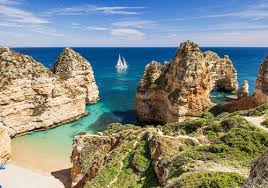
Lagos does not currently charge a municipal tourist tax. Guests staying in Alojamento Local properties in Lagos pay €0 in city tax in 2026 — unlike in Albufeira, Portimão, Lagoa, Loulé, Olhão, Faro and Vila Real de Santo António, where taxes of €1–€2 per night apply. Several websites wrongly list Lagos as charging one.
That doesn't mean Lagos hosts have no obligations: every AL operator must report foreign guests to AIMA through SIBA within 3 working days of check-in, submit monthly INE statistics, and keep their AL registration compliant. This guide covers what's actually required — and what to do if Lagos introduces a tax later.
Does Lagos Have a Tourist Tax?
If you searched "Lagos tourist tax," you've probably seen conflicting answers. Several aggregator sites and host guides list Lagos among the Algarve municipalities charging €1–€2 per night. As of 2026, that is not correct: the Câmara Municipal de Lagos has not published a tourist tax regulation, and Lagos does not appear in any official count of charging municipalities.
The confusion is understandable. Lagos began studying a tourist tax years ago — a proposal of around €1.50 per night was discussed as far back as 2019 — and AMAL, the association of Algarve municipalities, has pushed for a common tourist tax across all 16 concelhos of the region. Seven of Lagos's neighbours now charge one. Writers who assume the whole Algarve moved together simply included Lagos by extension. It didn't — at least not yet.
For hosts, the practical position is simple: do not charge guests a tourist tax in Lagos. Collecting a municipal tax that doesn't exist is worse than an admin error — you'd be charging guests a fee with no legal basis and nowhere to remit it.
What Lagos Guests Pay Compared to the Rest of the Algarve
Municipality | Tourist tax (2026) | Night cap | Min. age |
|---|---|---|---|
Lagos | None | — | — |
Albufeira, Portimão, Lagoa | €2 high season / €1 low season | 7 | 13+ |
Loulé | €2 high / €1 low | 5 | 16+ |
€2 / €1 (rules revised Dec 2025) | 5 | 16+ | |
Faro | €2 (Mar–Oct) / €1 (Nov–Feb) | 7 | 16+ |
€1 (campsites €0.50) | 7 | over 10 |
If you market your Lagos property to price-conscious travellers, this is a small but real advantage: a family of four adults staying a week pays €0 in city tax in Lagos versus up to €56 in Portimão, twenty minutes down the road. It's worth a line in your listing.
So What DO Lagos Hosts Have to Comply With?
No tourist tax does not mean no obligations. Lagos AL operators have three standing compliance duties — and these are national, not municipal, so there's no ambiguity about whether they apply.
1. SIBA: Reporting Your Guests to AIMA
This is the big one, and the one that catches new hosts. Under Portuguese law, every accommodation provider — including a single-apartment Airbnb host — must report the identity of foreign guests to AIMA (the Agency for Integration, Migration and Asylum, which absorbed the former SEF's functions) through the SIBA system (Sistema de Informação de Boletins de Alojamento).
The mechanics: for each foreign guest, you submit an accommodation bulletin (boletim de alojamento) with their identity details, travel document, nationality, and stay dates. The deadline is 3 working days from check-in, with departure also communicated. Submissions go through the SIBA portal — either keyed in manually, or delivered as a file upload if your software generates it.
This applies to every booking with foreign guests, every time, regardless of platform. Airbnb does not do it for you. Booking.com does not do it for you. And unlike the tourist tax — a per-municipality patchwork — SIBA applies identically in Lagos, Lisbon, and everywhere in between. Non-compliance is an administrative offence with real fines, and it's one of the first things checked when something goes wrong with a guest.
If you take one action after reading this article, register your Lagos property on SIBA and build guest reporting into your check-in routine. (Or automate it — more below.)
2. INE: Monthly Statistical Reporting
AL establishments are covered by INE's accommodation survey (the IPHH — Inquérito à Permanência de Hóspedes na Hotelaria e Outros Alojamentos). You report monthly figures — guests, overnight stays, origin markets, revenue — through INE's portal. It's statistics, not tax, but it's mandatory, and yes, it's due even in months with zero bookings.
3. Your AL Registration Itself
The foundations: a valid AL registration (RNAL number) obtained before operating, the AL number displayed in every listing and advertisement, the property book (livro de reclamações, safety requirements, capacity limits), and civil liability insurance. The Câmara Municipal de Lagos is the licensing authority for AL in the concelho, so municipal contact still matters — just for registration and inspections rather than tourist tax.
The Compliance Picture: Lagos vs. a Tourist-Tax Municipality
Obligation | Lagos host | Portimão host |
|---|---|---|
SIBA guest reporting to AIMA (3 working days) | Yes | Yes |
INE monthly statistics | Yes | Yes |
AL registration, insurance, display rules | Yes | Yes |
Municipal tourist tax collection | No | Yes — €2/€1, monthly declaration |
Municipal tax platform registration | No | Yes |
The national layer is identical everywhere; only the municipal tax layer differs. That's why building your compliance workflow around SIBA and INE first is the right order of operations — the tourist tax, where it exists, sits on top.
Will Lagos Introduce a Tourist Tax?
Quite possibly. The regional direction of travel is clear: AMAL has advocated a harmonised tourist tax across the Algarve, seven municipalities already charge, and Lagos has studied it before. Municipal budgets, election cycles and tourism-pressure debates all push the same way.
What that means practically: check the Câmara Municipal de Lagos website (cm-lagos.pt) at the start of each year, watch for a public consultation on a "Regulamento da Taxa Municipal Turística" — regulations must go through consultation and Diário da República publication before taking effect, so there's always lead time — and follow ALEP, whose member updates flag these changes early. When it happens, expect the regional template: per person, per night, seasonal €2/€1, a night cap, an age threshold, and a monthly declaration platform.
We'll update this article the moment Lagos's position changes.
How EazyAL Helps Lagos Hosts
EazyAL is built for Portugal's AL compliance stack, not just tourist tax. For a Lagos host today, that means: guest data captured once at online check-in, SIBA bulletins generated and submitted to AIMA automatically within the deadline, INE-ready monthly figures, and clean records if an inspection ever asks. And if Lagos does introduce a tourist tax, it becomes one more toggle on properties you've already set up the guest data pipeline that powers SIBA is the same one that calculates tourist tax everywhere else we support.
Frequently Asked Questions
How much is the tourist tax in Lagos, Portugal? There isn't one. As of 2026, Lagos does not charge a municipal tourist tax — guests pay €0 in city tax. Websites listing Lagos at €1–€2 per night are confusing it with neighbouring municipalities.
Why do some websites say Lagos charges a tourist tax? Because seven other Algarve municipalities do, and because Lagos publicly studied a tax in the past. Aggregator guides often generalise "the Algarve" without checking each concelho's regulations.
Do Airbnb hosts in Lagos have to collect any tax from guests? No municipal tourist tax, no. Your obligations are national: SIBA guest reporting to AIMA within 3 working days of check-in for foreign guests, monthly INE statistics, and maintaining a valid AL registration.
What is SIBA and does it apply to a small AL in Lagos? SIBA is the system through which all accommodation providers report foreign guests' accommodation bulletins to AIMA. It applies to every AL, from a single room to a villa portfolio, in every municipality.
Will Lagos introduce a tourist tax in 2026 or 2027? It's plausible given the regional trend, but nothing is approved. A new tax requires a published municipal regulation with public consultation first, so hosts will have warning. Monitor cm-lagos.pt and ALEP updates.
If Lagos introduces the tax, what will it look like? Most likely the Algarve template: €2 per person per night in high season and €1 in low season, a cap of 5–7 nights, an age threshold of 13 or 16, and monthly declarations through a municipal platform.
Can I charge guests a "city tax" in Lagos anyway to cover my admin costs? No. A tourist tax is a municipal levy — charging one that doesn't exist has no legal basis. If you want to price in admin costs, put them in your rate or a disclosed cleaning/service fee, not a fake tax line.