Funchal Madeira Tourist Tax 2026: €2/Night Rate & How to Pay
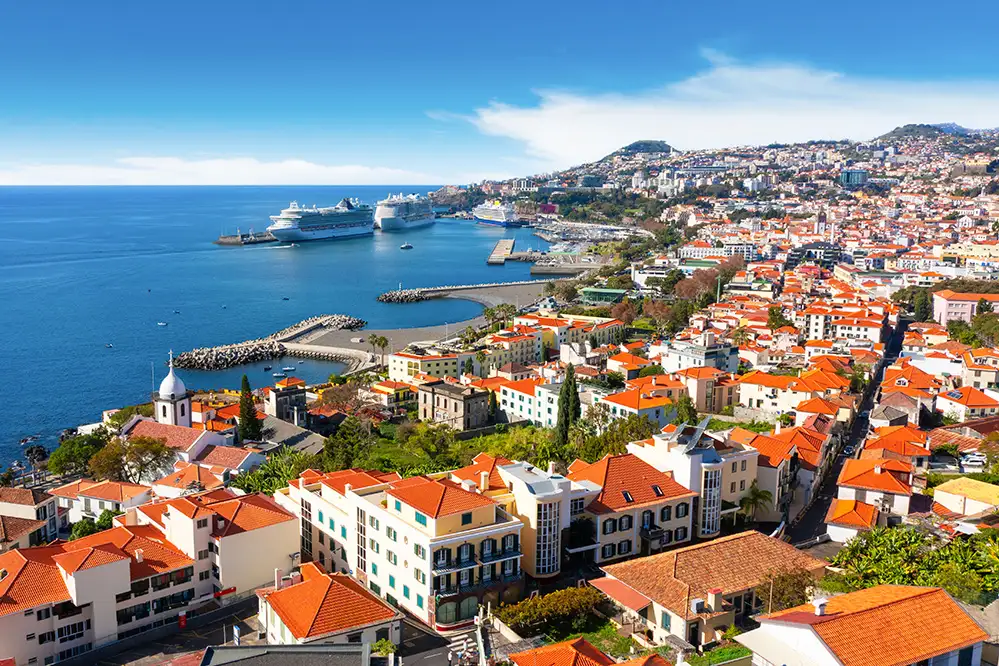
If you manage an Alojamento Local (AL) property in Funchal, Madeira Island, you've likely heard about the tourist tax also known as taxa turística or Ecotax.
As a host, understanding how this tax works, who pays it, and how to collect and declare it correctly is essential for staying compliant with local regulations.
Funchal Tourist Tax Summary
In Funchal, the tourist tax is generally:
€2per guest per nightup to a maximum of
7 nightscharged only to guests aged
13 and overcapped at
€14per guest per stay
Based on the municipal regulation, the tax applies to overnight stays in tourist accommodation and local accommodation, and the municipality also provides a dedicated reporting platform for operators. Registration , Payment and further Information can be found here.
What Is the Tourist Tax in Funchal, Madeira?
The tourist tax in Funchal is a municipal levy charged to guests staying in licensed accommodation, including Alojamento Local properties, hotels, and guesthouses. It was introduced by the Câmara Municipal do Funchal to help fund local tourism infrastructure and sustainable development across the island of Madeira. Read Tourist Tax Ponto do Sol , Madeira.
How Much Is the Tourist Tax in Funchal?
As of 2024, the tourist tax rate in Funchal is €2 per person, per night, capped at a maximum of 7 consecutive nights per stay — meaning the maximum charge per guest is €14.
Who Is Exempt from the Funchal Tourist Tax?
Not all guests are required to pay the tourist tax. The following are typically exempt:
Children under 13 years of age
Guests with a recognized disability of 60% or more
Guests on medical stays or treatments
Residents of the Autonomous Region of Madeira
Always verify the most current exemption criteria with the Câmara Municipal do Funchal, as rules may be updated.
Online site to Pay the Tourist Tax in Funchal?
Access this site , and enter your credentials or register.
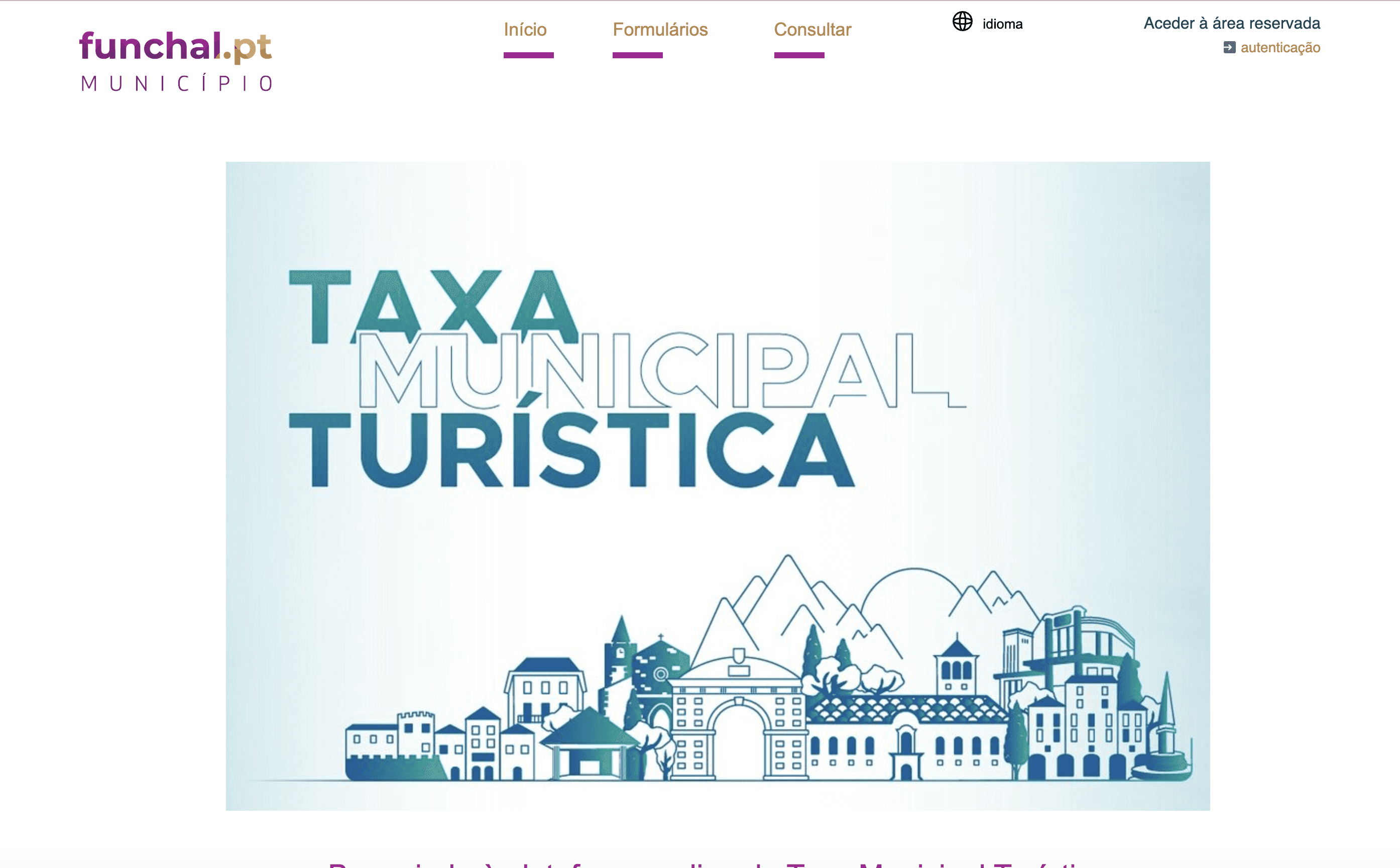
How to Register for Tourist Tax in Funchal
Before an Alojamento Local host can submit tourist tax declarations in Funchal, they need access to the municipality’s online tourist tax platform.
The registration process is not the same as submitting the monthly tourist tax report. First, the host or property representative must create an account on the Funchal tourist tax platform. After the account is created, the municipality reviews and validates the registration.
Only after this validation is completed can the host access the platform’s full functionality, submit tourist tax forms, or consult submitted information.
In practice, the process works like this:
The host registers on the Funchal tourist tax platform.
The host provides identification and taxpayer details.
The platform confirms that the registration data was received.
The municipality validates the registration and any required documents.
Once approved, the host receives confirmation that the adhesion was completed.
The confirmation email from the platform may say that the data was sent successfully, but this does not mean the account is fully active yet. The host must wait for validation before submitting forms.
Once the registration is approved, the host should receive a message confirming that the adhesion to the online platform has been completed successfully.
In some cases, the platform or municipality may request supporting documents, such as proof of tax activity or a Certidão de Enquadramento de IVA from the Finanças portal. The document should correspond to the NIF used for the registration.
What is XML submission of Tourist Tax in Funchal?
XML upload is a way to submit the monthly accommodation report in bulk, instead of filling in each monthly form manually on the platform.
It is mainly useful for hosts or agencies managing multiple AL properties, because the XML file can include the required monthly data for several units, such as each AL licence number and the number of overnight stays.
To use it, the host or agency must first prepare the XML file using the required structure.
However, having the XML template is not enough. The host or agency must also send an email requesting permission to submit monthly reports by XML. Once approved, the platform team will activate XML submission for that account. EazyAL prepares the XML for hosts in Funchal to submit using this method.
In simple terms: XML upload is a faster and more automated method for submitting monthly tourist tax/accommodation reports, especially when managing several properties.
Who Collects the Tourist Tax?
As an Alojamento Local host in Funchal, you are legally responsible for collecting the tourist tax from your guests at the time of check-in or check-out and declaring it to the municipality. Failure to collect or declare correctly can result in fines and compliance issues.
This is where many hosts — especially those managing multiple AL units in Madeira — find the process overwhelming.
How EazyAL Simplifies Tourist Tax Collection for Alojamento Local Hosts
Managing tourist tax declarations in Funchal alongside SIBA guest registration (AIMA/SEF), INE IPHH monthly statistics, and day-to-day property management is a significant administrative burden.
EazyAL is designed specifically for Alojamento Local hosts in Portugal to streamline this entire process. With EazyAL, you can:
Collect guest information during online check-in — including details needed for tourist tax records
Track stays and calculate tourist tax automatically based on guest numbers and nights
Maintain accurate records for municipal declarations and compliance audits
Manage multiple AL properties from a single dashboard, saving hours of administrative work
Whether you're a solo host with one property in Funchal or managing several AL units across Madeira, EazyAL ensures your tourist tax obligations, SIBA submissions, and INE IPHH reporting are handled efficiently and accurately.
Key Takeaways for Alojamento Local Hosts in Funchal
The tourist tax in Funchal is €2 per person, per night, up to 7 nights
Hosts are legally responsible for collection and declaration
Children under 13 and certain other groups are exempt
Non-compliance can lead to fines and legal issues
Tools like EazyAL make managing tourist tax alongside all other AL compliance requirements in Portugal simple and stress-free
Stay Compliant. Stay Efficient. Use EazyAL.
Managing an Alojamento Local in Madeira comes with real legal responsibilities — from SIBA guest registration to INE IPHH submissions and tourist tax collection in Funchal. EazyAL brings all of these obligations together in one easy-to-use platform, so you can focus on delivering great guest experiences instead of drowning in paperwork.
👉 Start for free at EazyAL.com — no credit card required, no commissions, no obligations.
Read more here about XML submission and Tourist Tax in Funchal
Frequently Asked Questions About the Funchal Tourist Tax
How much is the tourist tax in Funchal in 2026?
The Funchal tourist tax is €2 per guest, per night, up to a maximum of 7 consecutive nights. This means the maximum tourist tax for one guest is €14 per stay.
Does the Funchal tourist tax apply to Alojamento Local properties?
Yes. The Funchal tourist tax applies to paid overnight stays in accommodation within the municipality, including Alojamento Local, hotels, apartments, rural tourism units, campsites and similar accommodation types.
Who has to pay the tourist tax in Funchal?
The tax is due by guests staying overnight in eligible accommodation in the municipality of Funchal. It applies throughout the year and is charged per person, per night, up to the 7-night limit.
Are children exempt from the Funchal tourist tax?
Yes. Guests aged 12 or under are not subject to the Funchal tourist tax. In practical terms, the tax is normally charged to guests aged 13 and over.
Are Madeira residents exempt from the Funchal tourist tax?
Yes. Guests who are residents of the Autonomous Region of Madeira are not subject to the Funchal overnight tourist tax, provided they can prove their fiscal domicile.
Are guests with disabilities exempt from the Funchal tourist tax?
Guests with a recognised disability or incapacity of 60% or more are not subject to the Funchal tourist tax, provided they present valid supporting documentation.
Are medical stays exempt from the Funchal tourist tax?
Do not assume this automatically. Some older tourism-tax discussions in Madeira mentioned medical stays, but the current Funchal regulation text I found lists Madeira residents, children aged 12 or under, and guests with disability/incapacity of 60% or more. Hosts should confirm any medical-stay exemption directly with Câmara Municipal do Funchal before applying it.
Who is responsible for collecting the tourist tax in Funchal?
In most cases, the accommodation operator is responsible for collecting the tourist tax from guests. For Alojamento Local hosts, this means the host or management company must calculate, collect, declare and deliver the tax to the municipality, unless responsibility has been transferred to a booking platform where applicable.
When should an AL host declare the Funchal tourist tax?
The amounts collected must be communicated to the Municipality of Funchal by the 15th day of the month following the month to which the tax relates. The regulation also says this communication obligation applies even when no tourist tax was collected, as long as the establishment has not ceased activity.
When does the tourist tax need to be paid to Câmara Municipal do Funchal?
The declared amounts must be delivered to the Municipality of Funchal by the last day of the month following the month in which the tax was collected. Payment is normally made using the payment reference or method provided by the municipality.
Do hosts need to register on the Funchal tourist tax platform?
Yes. AL operators must register their entity and add their accommodation units to the electronic tourist tax platform. The regulation refers to a 30-day period after receiving the Turismo de Portugal registration number for Alojamento Local.
Is registering on the tourist tax platform the same as submitting a monthly declaration?
No. Registration gives the host access to the platform. The monthly declaration is a separate recurring task where the host reports the tourist tax amounts collected for the relevant month. In practice, a host must first complete platform registration and validation before they can submit declarations.
What happens if I had no guests or no tourist tax to collect in a month?
The Funchal regulation states that the communication obligation remains even when no tourist tax amount was collected, provided the establishment has not ceased activity. This means hosts should not assume that “no tax collected” means “nothing to report.”
Does the Funchal tourist tax have VAT?
The regulation states that the tourist tax should be invoiced with reference to non-subjection to IVA, under the relevant VAT Code provision. The tourist tax amount should be shown separately on the accommodation invoice or issued through separate invoicing, depending on the operator’s procedure.
What records should AL hosts keep for the Funchal tourist tax?
Hosts should keep supporting records for tourist tax declarations, especially documents used to justify non-subject/exempt situations. The regulation states that documents supporting Madeira-resident and disability/incapacity situations should be archived for four years and may be requested by the municipality.
What is XML submission for the Funchal tourist tax?
XML submission is a way to submit monthly tourist tax information in bulk instead of entering each declaration manually. It is especially useful for hosts, agencies or property managers with several AL units in Funchal. Local reporting has been described as allowing a single XML file to include the accommodation units and the relevant overnight-stay and exemption data.
Does EazyAL help with the Funchal tourist tax?
Yes. EazyAL helps Alojamento Local hosts collect guest information, track stays, calculate tourist tax, and keep cleaner records for tourist tax, SIBA/AIMA guest registration and INE/IPHH reporting. For Funchal hosts managing several properties, EazyAL can also help prepare the data needed for more efficient tourist-tax reporting.
What is the easiest way to manage tourist tax as an AL host in Funchal?
The easiest approach is to collect the right guest information during online check-in, calculate the tax automatically based on guest age and nights stayed, keep evidence for exemptions, and prepare monthly declarations from one organised dashboard. EazyAL was built to simplify this process for Portuguese AL hosts.