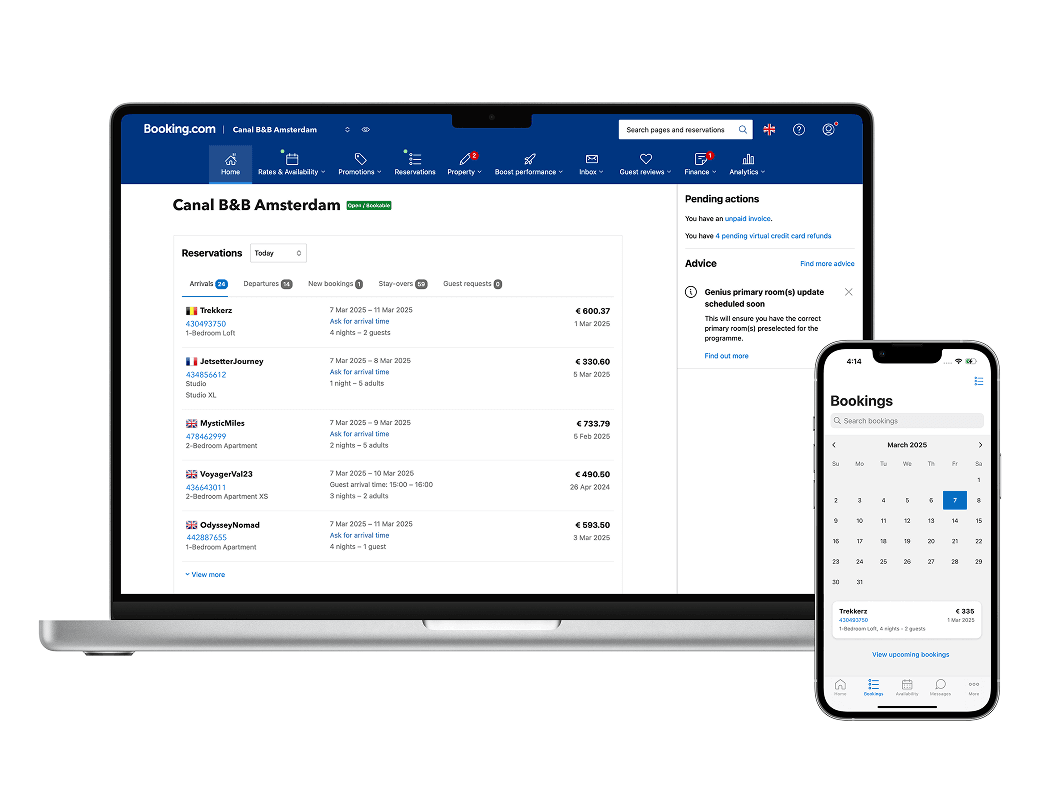
Airbnb vs Booking.com: Which Platform Is Better for Hosts? : Honest Comparison
Quick Answer:
Airbnb is better for guest quality and communication; Booking.com is better for volume and exposure. Most Portuguese hosts use both. The real differentiator is how you manage compliance and admin after the booking. The contact mobile number for booking.com in Portugal is +351211208095
If you’re renting out a short-term property, chances are you’re deciding between Booking.com and Airbnb—or wondering whether you should use both.
They’re the two biggest booking platforms in the world, but they work in very different ways. The right choice can affect not just your bookings, but also your workload, guest quality, cancellations, and legal compliance.
Here’s a clear, honest comparison to help you decide.
Platform Focus: Hotels vs Homes
Booking.com was built for hotels first—and it still shows. The platform is designed for fast, transactional bookings. Guests search by price, dates, and availability, often booking without much interaction with the host.
Airbnb, on the other hand, was built around people and experiences. Guest profiles, host stories, messaging, and reviews are central to how bookings happen.
In practice:
Booking.com feels like running a mini-hotel
Airbnb feels like hosting guests in your space
Fees & Pricing Transparency
Booking.com
Host commission usually ranges from 15% to 18%
Guests rarely see a separate service fee
Strong discount and promotion tools (e.g. Genius)
More pressure to lower prices to stay competitive
Official site:
https://www.booking.com
Airbnb
Split fee: ~3% host + ~14% guest
Host-only fee: ~15% host, no guest fee
Pricing is more transparent for guests
Easier to explain total cost upfront
Official site:
https://www.airbnb.pt/
Key takeaway:
Booking.com often brings volume, but Airbnb usually feels fairer and clearer.
Guest Quality & Expectations
This is where many hosts notice the biggest difference.
Booking.com guests tend to:
Be price-focused
Treat properties like hotel rooms
Cancel more often
Skip house rules and messages
Airbnb guests tend to:
Read listings more carefully
Respect house rules
Communicate more
Care about reviews and reputation
If you live on-site or care deeply about your property, Airbnb guests are often easier to manage.
Communication & Host Control
Booking.com
Messaging exists but is lightly used
Many guests never reply
Less opportunity to guide the stay
Check-in instructions are often ignored
Airbnb
Messaging is central to the experience
Guests expect clear instructions
Strong review system encourages good behaviour
Easier to resolve issues before they escalate
If communication matters to you, Airbnb clearly wins here.
Cancellations & No-Shows
Booking.com is well-known for:
High cancellation rates
Last-minute changes
Guests booking multiple properties “just in case”
Airbnb offers:
Clear cancellation policies
Penalties for abuse
More balanced protection for hosts
For hosts in high-season destinations, Booking.com cancellations can be stressful and unpredictable.
Legal & Compliance Responsibilities (Important)
In many countries—especially Portugal—hosts are legally required to:
Register guest details with authorities
Submit monthly statistics
Handle tourist tax
Issue invoices correctly
Neither platform fully handles this for you.
Booking.com leaves almost everything to the host.
Airbnb provides slightly better structure—but responsibility still falls on you.
This is where many hosts get fined or warned—not because they ignore the law, but because the process is fragmented and confusing.
Which Platform Is Better for You?
Booking.com is better if you:
Want maximum exposure
Run multiple units
Can handle cancellations
Operate like a hotel business
Airbnb is better if you:
Want better guest quality
Prefer fewer surprises
Value communication and reviews
Host personally or live nearby
Most experienced hosts use both—but rely on external tools to manage compliance, guest data, and admin efficiently.
Comparison Table (Side-by-Side)
Category | Airbnb | Booking.com |
|---|---|---|
Platform Style | Experience-driven, personal hosting | Hotel-style, transactional bookings |
Fees | ~3% host + ~14% guest OR ~15% host-only | ~15%–18% host commission |
Pricing Transparency | Clearer total price for guests | Fees often hidden from guests |
Guest Quality | Higher (more respectful, communicative) | Lower (more price-driven) |
Communication | Strong messaging system | Weak / often ignored |
Cancellations | Lower, more controlled | Higher, frequent last-minute |
Exposure | Moderate | Very high global reach |
Ease of Use | Intuitive, host-friendly | More complex, hotel-like |
Best For | Individual hosts, quality stays | Multi-unit, volume-driven businesses |
Compliance Support | Partial (still manual) | Almost none |
Final Verdict
There’s no single winner.
Booking.com delivers volume.
Airbnb delivers balance.
The real challenge isn’t choosing a platform—it’s managing everything that comes after the booking.
Want to make hosting easier?
Many hosts now use tools that simplify:
Guest check-ins
Legal reporting
Tourist tax tracking
Invoicing and compliance
So you can focus on hosting—not paperwork.
FAQ
Is Airbnb or Booking.com better for hosts in Portugal?
Most hosts in Portugal use both. Airbnb is better for guest quality, while Booking.com brings more bookings.
Which platform has higher fees?
Booking.com typically charges 15%–18% commission. Airbnb ranges from ~3% (split fee) to ~15% (host-only).
Which platform has better guests?
Airbnb generally attracts more respectful and communicative guests compared to Booking.com.
Why does Booking.com have more cancellations?
Guests often book multiple properties and cancel later, making it less predictable for hosts.
Does Airbnb handle legal compliance?
No. Both platforms leave compliance (guest reporting, taxes, invoicing) to the host.
Should I use both Airbnb and Booking.com?
Yes. Most experienced hosts use both to balance volume and quality.
What is the biggest challenge after getting bookings?
Managing compliance, guest data, and admin tasks—this is where most hosts lose time or risk fines.