Cascais to Regulate Short-Term Rentals in 2026: What It Means for Hosts
Cascais to Regulate Short-Term Rentals in 2026: What It Means for Hosts
Introduction
The Municipality of Cascais has officially approved the start of a new regulatory framework for short-term rentals (Alojamento Local).
This decision comes at a time when the number of registered properties continues to grow, increasing pressure on local housing and communities.
But what does this actually mean for hosts?
Why is Cascais regulating short-term rentals?
According to the official document , there are several key reasons:
Cascais already has around 2,760 registered short-term rentals
Portuguese law requires municipalities with more than 1,000 units to introduce local regulations
There are growing concerns about:
Housing shortages for residents
Urban pressure and over-tourism
Social impact on neighborhoods
In practical terms, the growth of short-term rentals is pushing the municipality to take action.
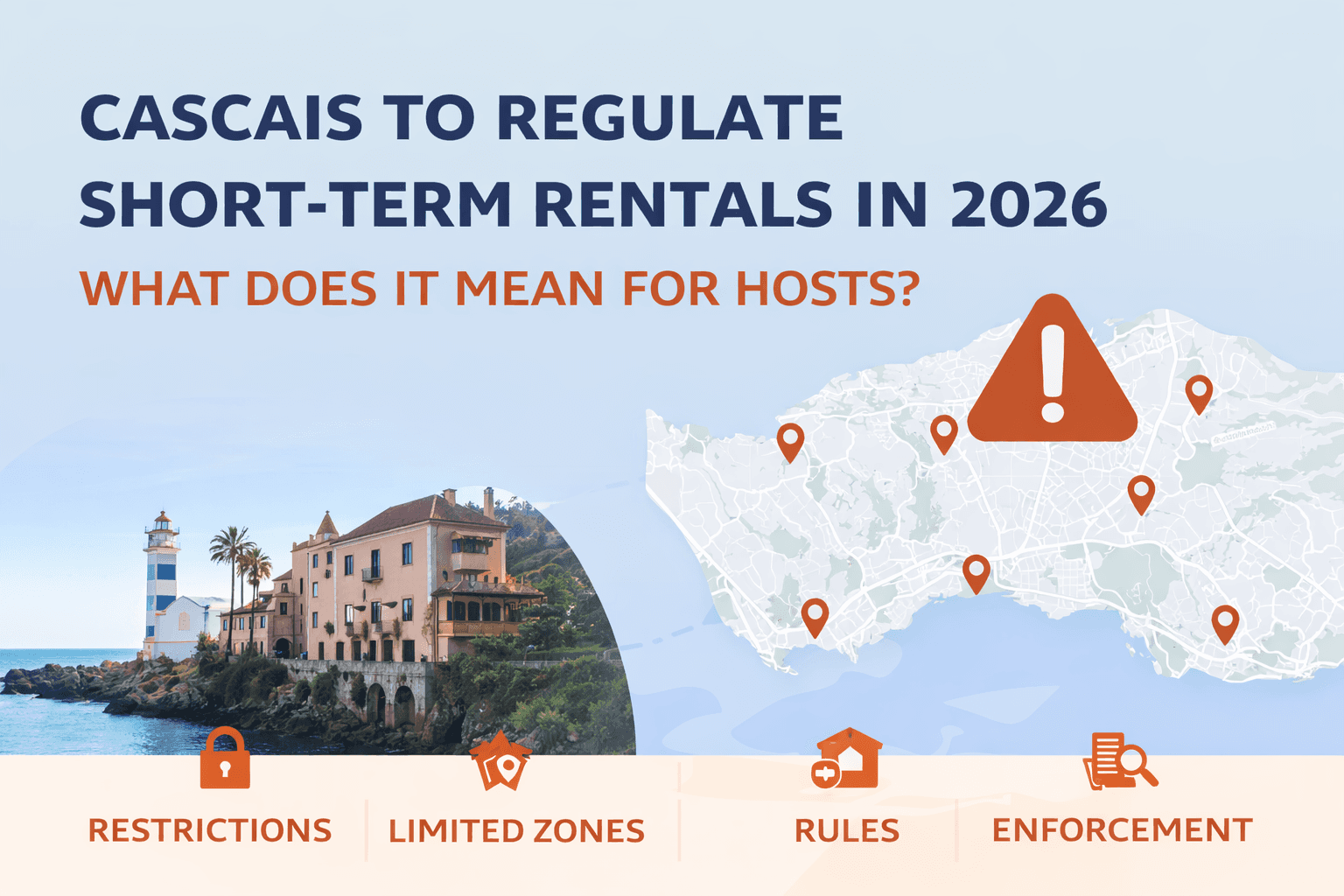
What could change under the new regulation?
Although still in early stages, the regulation may introduce:
Containment zones
Specific areas where new short-term rental licenses may be restricted or not allowed.
Limits per area
A maximum number of rentals per parish or zone, controlling density.
Usage rules
Restrictions on what types of properties can operate as short-term rentals, particularly in residential buildings.
Stronger enforcement
Increased inspections and more active control by the municipality.
What happens next?
The council approved three key steps:
Start drafting the regulation
Publish it on the municipality’s official website
Open a 10-day public consultation period
This means hosts and stakeholders will have the opportunity to submit feedback before the regulation is finalized.
Does this affect current hosts?
At this stage:
There is no immediate impact
Existing licenses are not affected
However, in the future:
Opening new short-term rentals may become more difficult
Certain areas may be restricted
Additional compliance requirements may be introduced
What should hosts do now?
If you own or plan to operate a short-term rental in Cascais:
Monitor the development of the regulation
Prepare for potential restrictions
Ensure full compliance with current legal obligations
Many hosts only react when enforcement begins, which is often too late.
How to stay compliant without added complexity
Operating a short-term rental in Portugal involves multiple obligations:
Reporting guest data through SIBA within 3 days
Submitting monthly statistics to INE (IPHH)
Managing tourist tax requirements
Handling invoicing and tax reporting
Tools such as EazyAL are designed to simplify this process:
Automatic collection of guest data before arrival
Preparation of required information for submissions
A simplified interface compared to official government portals
This becomes increasingly relevant as regulations tighten and enforcement increases.
FAQ
What are containment zones in short-term rentals?
They are areas where municipalities limit or restrict new short-term rental licenses to control housing pressure.
Has Cascais banned new short-term rentals?
No. The municipality has only initiated the process of creating a regulation.
Will existing hosts be affected?
Not immediately, but future rules may introduce new requirements or restrictions.
Can hosts participate in the process?
Yes. There is a 10-day public consultation period after the regulation is published.
Will other cities follow this approach?
Yes. Cities such as Lisbon and Porto have already implemented similar measures.
Call to Action
If you want to stay compliant and avoid unnecessary risk, consider automating your guest reporting, INE submissions, and operational workflows. Tools like EazyAL are designed specifically for hosts operating in Portugal.