Tourist Tax as an Airbnb Host in Madeira Island Portugal (2026 Guide)
How to Collect Tourist Tax as an Airbnb Host in Madeira Island (2026 Guide)
What Every Host Needs to Know
Madeira has become one of Europe’s most dynamic travel destinations — and with its booming Airbnb market comes new responsibilities. One of the most important compliance tasks for hosts is collecting and remitting the local tourist tax. If you’re hosting on Madeira Island, understanding this requirement will help you avoid fines and keep your short-term rental running smoothly.
What Is the Tourist Tax in Madeira?
The tourist tax, also sometimes called Municipal Tourist Tax (MTT), is a local accommodation tax applied by some Madeira municipalities. Its purpose is to help fund local tourism infrastructure and services.
In Funchal, the capital and largest municipality on the island:
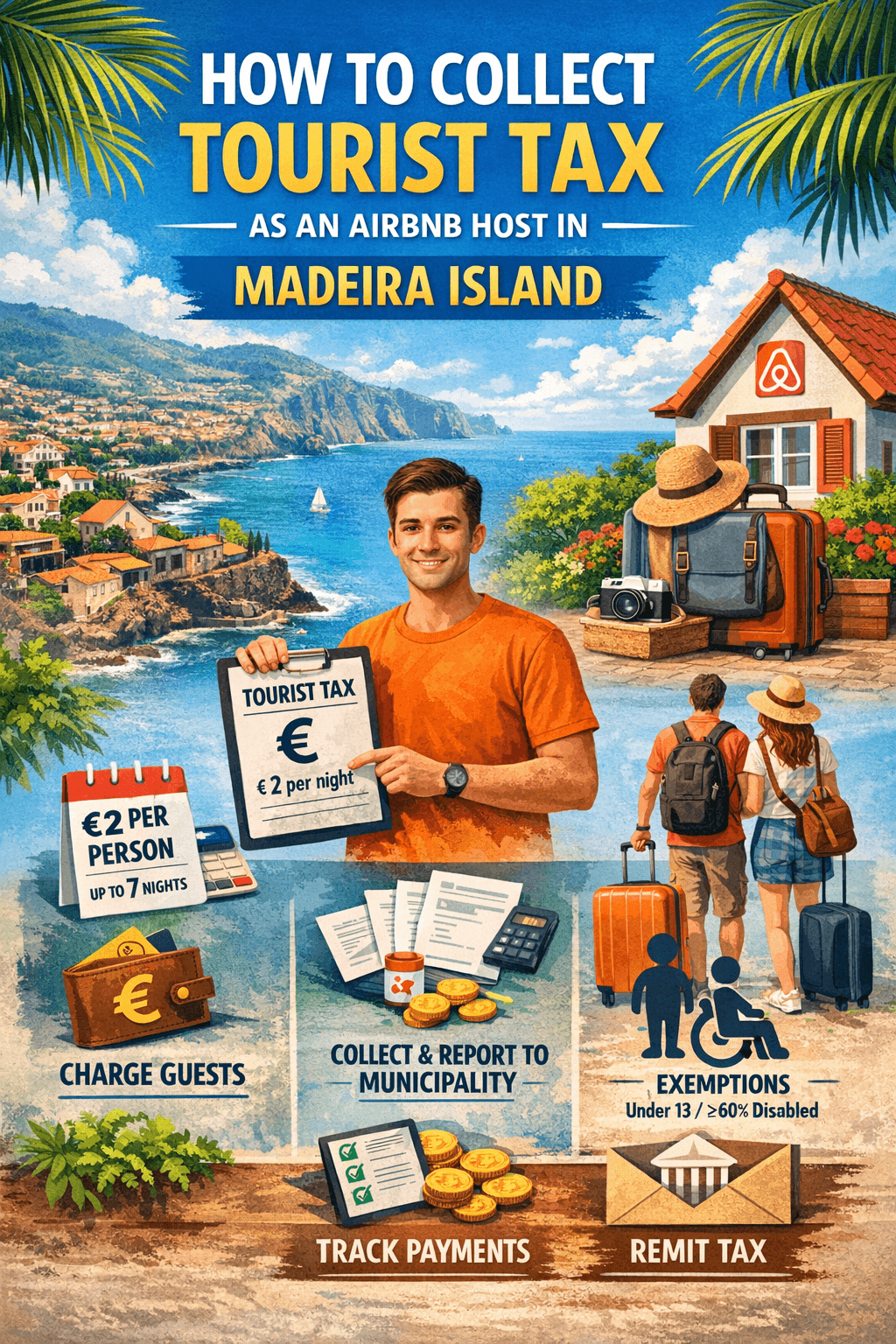
€2 per person, per night applies. Maximum of 7 nights per guest per stay (so up to €14 total). Applies to all non-resident guests aged 13 and over. Exemptions include children under 13 and guests with a disability of at least 60%. Other Madeira municipalities (like Santa Cruz and Porto Santo) also levy similar local taxes (for example, sometimes called EcoTaxa), typically around €2 per person per night (up to 7 nights). Rules vary slightly by location, so it’s best to confirm with the local city hall or your accountant.
In areas of Madeira where the tax doesn’t yet apply, this still may come soon — many municipalities are exploring similar levies.
Who Is Responsible for Collection?
As the Airbnb host / local accommodation operator (Alojamento Local), you are legally responsible for charging and collecting the tourist tax from guests unless the booking platform does this automatically for you.
Does Airbnb Collect It Automatically?
In some cities (like Lisbon or Porto), Airbnb may automatically collect tourist taxes on your behalf if the platform supports that feature. However, this depends on the platform’s arrangement with local authorities — and as of now, there’s no firm automatic tourist tax collection feature confirmed for Madeira via Airbnb. Community discussions suggest hosts may still need to collect it themselves.
How to Collect the Tourist Tax
Here’s how to do it step by step:
1. Decide How You Charge the Tax
You generally have three ways to collect the tourist tax as a host. You can include it in your nightly rate and clearly disclose it in the listing, which keeps pricing simple and transparent for guests. Alternatively, you can add it as a separate fee on your Airbnb or Booking.com listing, making the charge visible and clearly itemised. If the platform does not support this, you can collect the tax in person at check-in or check-out, which is still a valid option when handled properly.
Whichever method you choose, it’s essential that guests are informed about the tax before they book, as transparency builds trust and helps avoid misunderstandings or disputes. On Airbnb, this is typically done by adding a “Local Tourist Tax” in the Price Settings section and explaining how and when it will be paid.
The tourist tax should always be collected before or during the guest’s stay, most commonly at the time of booking (if the platform allows it) or at check-in or check-out. Leaving collection until after the guest has departed is risky and often leads to non-payment. Finally, remember that collecting the tax is only part of the responsibility — you must also record and report the amounts collected in line with your municipality’s requirements.
2. Track Payments
Use an Excel sheet, property management system (PMS), or accounting software to log each guest’s: Name, Stay dates , Number of nights ,Tax collected. This makes reporting and remittance simple.
3. Remit to the Municipality
Rules differ by municipality:
Some require monthly reporting with a reference number. Others want annual summaries.
Contact your local Câmara Municipal (city council) to confirm how and where to pay the collected amounts — they will typically give you a tax account number and payment instructions.
Tip: Many hosts find working with a Portuguese accountant (Contabilista Certificado) simplifies the process.
Exemptions and Special Cases
Children under 13 (in Funchal) are exempt from the tourist tax.Guests with ≥60% disability can be exempt if documentation is presented. Be sure to have a clear policy for how you verify exemptions to avoid disputes.
Legal Status & Guest Registration
In Portugal, operating a short-term rental comes with specific legal obligations. Hosts must be properly registered with an Alojamento Local (AL) license, report the stay of foreign guests to SEF, and declare all rental income to the Portuguese tax authorities. Failing to meet these requirements — including correctly handling tourist tax obligations — can result in fines, penalties, or even the suspension of your AL license, so it’s essential to keep all registrations, reporting, and payments fully up to date.