The Ultimate 2026 Guide for Airbnb & Short-Term Rental Hosts in Portugal
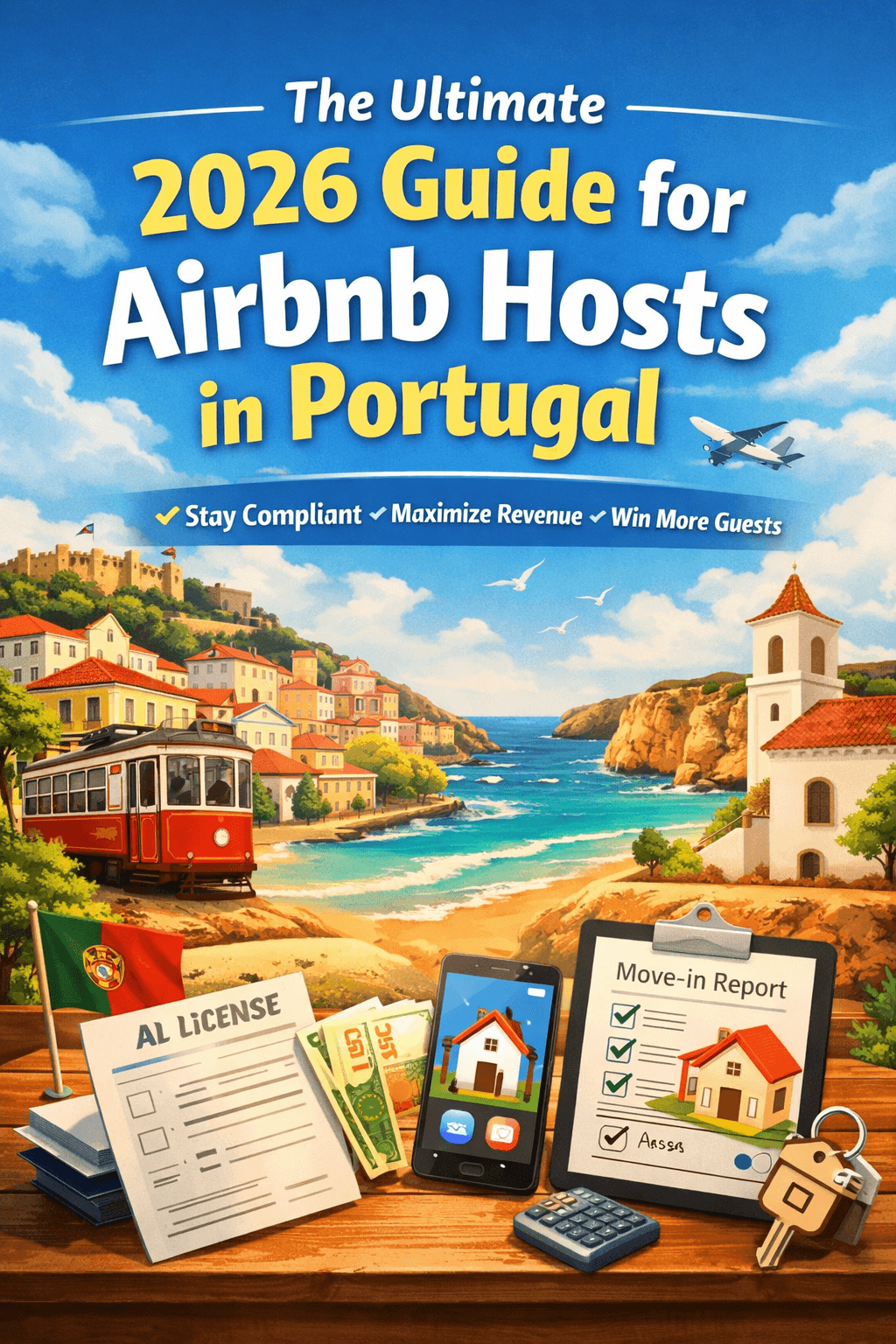
The Ultimate 2026 Guide for Airbnb & Short-Term Rental Hosts in Portugal
How to Comply, Maximize Revenue, and Win Guests in Today’s Evolving Market
Portugal remains one of Europe’s most attractive short-term rental markets, drawing millions of visitors every year with its stunning coastline, historic cities, and vibrant culture. Yet hosting in Portugal in 2026 is no longer as simple as creating a listing and watching the bookings roll in — you need to navigate strict regulations, local taxes, compliance requirements, and operational best practices to succeed. This comprehensive guide walks you through everything you need to stay legal, profitable, and competitive as an Airbnb host in Portugal.
1. Short-Term Rentals in Portugal: Regulatory Landscape
Alojamento Local (AL) — The Legal Basis
In Portugal, short-term rentals like Airbnb fall under the Alojamento Local (AL) regime — a regulated category of short-term tourist accommodation required by law. You cannot legally operate a short-term rental without obtaining an AL license from the local Câmara Municipal (Town Hall).
The application process is done through the Balcão do Empreendedor / ePortugal portal and requires documentation such as proof of ownership, safety equipment, and liability insurance. Once approved you receive an RNAL number, which must appear on your listing, marketing materials, and property signage.
Municipal Restrictions & Containment Zones
While national laws have eased some restrictions, municipalities now have greater authority to regulate short-term rentals locally. In high-demand areas like Lisbon, Porto, and parts of the Algarve, councils can suspend new AL registrations or impose containment zones — meaning no new short-term rental licenses can be issued in certain neighborhoods.
Even if your municipality allows new listings, always verify local zoning maps before investing — because a location that is legal today could face temporary restrictions tomorrow.
2. Registering Your Property & Staying Compliant
Step-by-Step: How to Obtain Your AL License
Becoming an Airbnb host legally in Portugal involves several key steps:
Register with Finanças (Tax Office) — obtain a NIF and register your activity under the correct CAE code (often 55201 for holiday rentals).
Apply for Alojamento Local — submit the application to your local Câmara Municipal via Balcão do Empreendedor.
Demonstrate Compliance — meet safety standards (fire extinguisher, first aid kit, ventilation, etc.) and have civil liability insurance.
Receive Your AL License (RNAL) — display the license number on all platforms (Airbnb, Booking.com) and in your property.
Failure to obtain a valid AL license can result in significant fines and forced delisting of your property.
3. Mandatory Tax & Reporting Obligations
Income Tax (IRS) & VAT
Short-term rental revenue in Portugal is taxable and must be reported in your annual tax filings. Profits from your AL activity are taxed as business income, subject to personal income tax (IRS).
If you surpass certain thresholds, you may also need to charge VAT (IVA) at the reduced accommodation rate (~6%) on rentals, similar to hotels and other lodging services.
Tourist Tax Collection
Portugal’s municipalities often levy a tourist tax — a per-person, per-night fee paid for stays in paid accommodations like Airbnb. Rates vary by location:
Lisbon: up to €4 per person per night (capped at 7 nights)
Porto: €3 per person per night (capped at 7 nights)
Funchal (Madeira): ~€2 per person per night (capped at 7 nights)
Other cities may charge between €1–€4.
It’s your responsibility as the host to collect and remit this fee unless your booking platform does it automatically and you’re sure of the coverage. Always disclose this on your listing and pricing breakdown to avoid guest disputes.
Guest Reporting (SEF)
Portuguese law requires all foreign guests staying in paid accommodations to be registered with the SEF (Serviço de Estrangeiros e Fronteiras) for safety and statistical tracking. This means collecting passport/ID data and submitting it to SEF, a step that professional software tools like Eazy AL or Chekin can automate for you.
4. Maximize Revenue & Occupancy in 2026
Dynamic Pricing & Seasonal Trends
Portugal’s short-term rental market remains strong but seasonal. Peak occupancy and daily rates typically occur in summer (June–September), while winter months see lower demand. Using dynamic pricing tools can help you optimize nightly rates in real time based on demand, booking patterns, and competitor pricing.
Targeting Off-Season Guests
To soften winter revenue dips, consider offering extended-stay discounts or promotions aimed at digital nomads and remote workers — a growing segment across Portugal. Longer minimum stays at slightly reduced rates often produce steadier income through the slower months.
Professional Presentation & Service
Hosts who invest in property presentation — professional photography, detailed descriptions, and thoughtful amenities — attract more bookings and higher reviews. Quick and clear communication, automated check-in instructions, and a friendly guest experience continue to be differentiators in 2026’s competitive landscape.
5. Avoiding Common Pitfalls
Underestimating Compliance Work
Hosting in Portugal isn’t just about a great listing — non-compliance risks fines, deactivation, or legal action. This means staying on top of your AL license status, guest reporting, tax filings, and municipal rules.
Ignoring Municipal Rules
Even if national AL laws allow your operations, some municipalities place local restrictions on where AL licenses are issued or how they are enforced — particularly in historic centers or areas with housing shortages. Check local policies before investing.
Not Communicating Fees Upfront
Failing to clarify tourist taxes or other local levies upfront can lead to negative reviews or cancellation requests. Always include them transparently in listing prices or descriptions.
6. Tools & Tech to Make Hosting Easier in Portugal
Modern software can save you hours of admin and help you stay compliant. Hosts commonly rely on:
Guest check-in & compliance automation (e.g., Eazy AL, Chekin) — to capture guest data and automate legal reporting.
Pricing automation — dynamic pricing tools help adjust rates in real time based on season and demand.
Message automation — send check-in info, house rules, local tips, and reminders automatically.
In a regulated market like Portugal, combining compliance tools with great guest communication is a high-impact hosting strategy for 2026.
Final Thoughts: Portugal Hosting in 2026
Portugal continues to be a lucrative short-term rental market, with strong demand and international appeal. But success today requires more than a beautiful property — it means staying on the right side of legal requirements, maximizing revenue with smart tools, and delivering an excellent guest experience.
Whether you’re a seasoned host or just starting, understanding AL licensing, tax rules, guest reporting, and dynamic pricing is key to thriving in Portugal’s increasingly sophisticated short-term rental landscape. Stay informed, stay compliant, and your Portugal Airbnb can be both profitable and sustainable in 2026 and beyond.
FAQ
Q: Do I need a licence to host on Airbnb in Portugal? A: Yes. All short-term rentals in Portugal must operate under an Alojamento Local (AL) licence, issued by your local Câmara Municipal. Without a valid AL licence and RNAL number, you cannot legally host — and risk significant fines and forced delisting from platforms like Airbnb.
Q: How do I get an AL licence in Portugal? A: You register your activity with Finanças (obtaining a NIF and the correct CAE code), then apply for your AL licence through the Balcão do Empreendedor / ePortugal portal. You'll need proof of ownership, safety equipment in place, and civil liability insurance. Once approved, your RNAL number must appear on all listings and at the property.
Q: Can Airbnb be banned in certain areas of Portugal? A: Yes. Municipalities like Lisbon, Porto, and parts of the Algarve can designate containment zones where new AL licences are suspended. A location that is legal today may face restrictions tomorrow — always verify local zoning rules before investing.
Q: How is Airbnb income taxed in Portugal? A: AL rental income is taxed as business income under personal income tax (IRS). If you exceed certain thresholds, VAT (IVA) at approximately 6% may also apply. Income must be declared in your annual tax filing — Airbnb does not handle this on your behalf.
Q: What is the tourist tax in Portugal and who collects it? A: Most Portuguese municipalities charge a per-person, per-night tourist tax. Rates vary — Lisbon charges up to €4, Porto €3, and Funchal around €2, typically capped at 7 nights. As the host, you are responsible for collecting and remitting this tax unless your booking platform does so explicitly and you have confirmed the coverage.
Q: Do I need to register guests with the Portuguese government? A: Yes. Portuguese law requires all foreign guests staying in paid accommodation to be registered with SEF/AIMA. This means collecting passport or ID details and submitting them within strict legal deadlines after arrival. Tools like EazyAL can automate this process so no submission is missed.
Q: Does Airbnb handle compliance for AL hosts in Portugal? A: No. Airbnb manages bookings, payments, and guest communication only. INE monthly statistics, SEF/AIMA guest registration, tourist tax remittance, and tax declarations are all the host's legal responsibility — regardless of which platform was used to take the booking.
Q: How can I reduce empty months as an Airbnb host in Portugal? A: Targeting digital nomads and remote workers with extended-stay discounts during winter months is one of the most effective strategies. Longer minimum stays at slightly reduced rates tend to produce steadier income through the low season.
Q: What tools do AL hosts in Portugal typically use? A: Most well-run AL hosts combine a compliance tool (like EazyAL) for guest registration and INE reporting, a dynamic pricing tool to optimise nightly rates, and message automation for check-in instructions and guest communication.
Q: What are the most common mistakes Airbnb hosts make in Portugal? A: The most frequent issues are assuming Airbnb handles compliance, missing INE zero-month submissions, submitting guest data to SEF/AIMA late, failing to collect tourist tax correctly, and not displaying the RNAL number on listings. Most of these mistakes happen not from negligence, but from not knowing how fragmented the compliance system is.