Vila Real de Santo António Tourist Tax 2026: Rates & Payment Guide

If you host guests in Vila Real de Santo António — including Monte Gordo, Manta Rota or Vila Nova de Cacela — you are responsible for charging the taxa turística de Vila Real de Santo António, declaring it on the municipal platform and paying it to the Câmara. It's one more layer of municipal tourist tax in Portugal admin on top of SIBA, invoicing and calendar management.
EazyAL offers a convenient way to pay this tax, ensuring a smooth experience for tourists.

VRSA tourist tax at a glance
Item | Rule (2026) |
|---|---|
Rate | €1 per person, per night |
Campsites, caravan parks & motorhome areas | €0.50 per person, per night |
Maximum charged | First 7 consecutive nights per stay |
Season | Year-round (no high/low season split) |
Children 10 and under | Exempt |
Children 11–13 | Pay 50% (€0.50/night) |
When guests pay | At the end of the stay, with the invoice |
Who collects & delivers | The accommodation (hotel, AL, rural tourism, etc.) |
Official platform | taxaturistica.cm-vrsa.pt (powered by iTaxas/ACIN) |
In force since | 1 December 2018 |
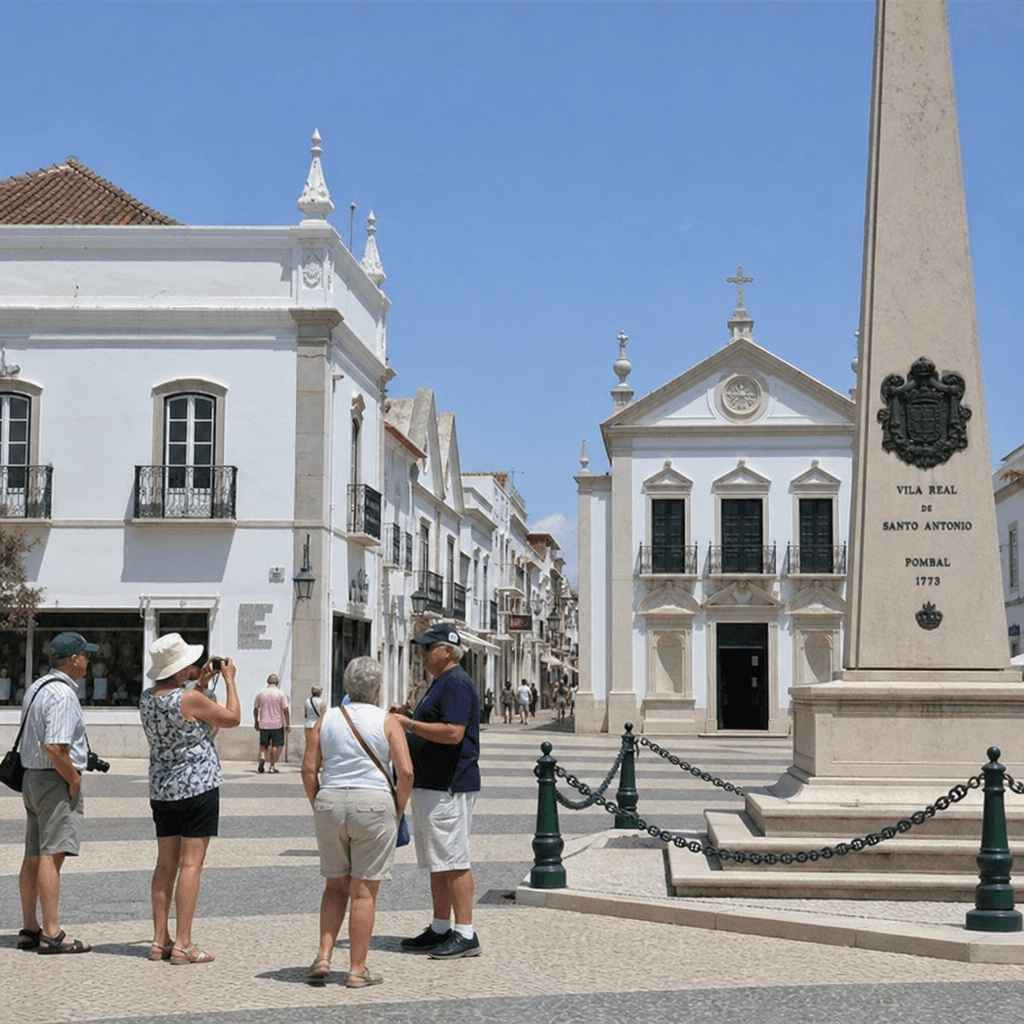
Unlike Albufeira or Faro, Vila Real de Santo António keeps a single flat rate all year — one of the simpler regimes in the Algarve tourist tax 2026 landscape. Compare tourist tax rates city by city in Portugal
Understanding the Tourist Tax in Vila Real de Santo António
Yes. Vila Real de Santo António introduced its municipal tourist tax on 1 December 2018, and it remains in force in 2026. The tax applies per person, per overnight stay (dormida), capped at seven consecutive nights per stay, and is charged in every type of tourist accommodation in the municipality:
Hotels, pousadas and aparthotels
Tourist apartments, villages and resorts
Alojamento Local (AL) — Airbnb, Booking.com and other short-term rentals
Rural tourism (casas de campo, agroturismo, rural hotels)
Campsites, caravan parks and motorhome service areas (reduced €0.50 rate)
The revenue funds the municipality's goal of keeping VRSA an attractive, sustainable destination. Official VRSA municipal tourist tax
Key Aspects of the Vila Real de Santo António Tourist Tax:
Charged per person, per night.
Varies by accommodation type.
Collected to improve local tourist services.
How much is the tourist tax? Worked examples
The portugal tourist tax calculator logic for Vila Real de Santo António is simple: eligible guests × nights (max 7) × €1.
Booking | Calculation | Tax due |
|---|---|---|
Couple, 5 nights in Monte Gordo | 2 × 5 × €1 | €10.00 |
Family of 4 (kids aged 8 and 12), 7 nights | (2 × 7 × €1) + (1 × 7 × €0.50) | €17.50 |
2 adults, 10 nights | 2 × 7 × €1 (nights 8–10 free) | €14.00 |
Motorhome, 2 adults, 3 nights | 2 × 3 × €0.50 | €3.00 |
The child aged 8 pays nothing; the 12-year-old pays half. Nights beyond the seventh are never charged.
How to pay the Vila Real de Santo António tourist tax online: the iTaxas platform
VRSA runs its tax through taxaturistica.cm-vrsa.pt, an electronic platform built on iTaxas by ACIN. If you're searching "portugal tourist tax how to pay online", this is the flow for hosts:
Register your property on the platform within 30 days of starting activity (registration is mandatory for all tourist developments and AL units).
Collect the tax from guests at the end of each stay, itemised on the invoice.
Declare overnight stays for the period — total dormidas, nights beyond the 7-night cap, and exempt nights (children ≤10).
Pay the collected amount to the municipality through the platform.
Guests never pay the municipality directly — the accommodation is the collection agent. The exception: at the Monte Gordo municipal campsite and motorhome service areas, the tax is paid upfront at check-in.
The problem: manual declarations don't scale
Doing this by hand means exporting reservations from Airbnb and Booking.com, cross-checking guest ages, counting who passed the 7-night cap, and re-typing totals into iTaxas every declaration period — for every property, every period, without errors. Miss a declaration and you're exposed to municipal enforcement.
What happens if you don't pay tourist tax in Vila Real de Santo António?
The tourist tax is a legal obligation under the municipal regulation, not an optional fee. Hosts who fail to register, declare or hand over collected amounts face municipal enforcement proceedings and fines, and remain liable for the uncollected tax. Since the platform records every registered AL in the concelho, unregistered or non-declaring properties are easy to spot. If you've fallen behind, register on the platform and regularise past periods before the municipality contacts you first.
How Eazyal simplifies the Vila Real de Santo António tourist tax
Eazyal is Portugal's compliance platform for Alojamento Local hosts, and it turns the tourist tax from a monthly chore into a background process:
Automatic calculation per booking — Eazyal syncs your Airbnb, Booking.com and direct reservations and applies VRSA's exact rules: €1/night, 7-night cap, child exemptions and the 50% rate for ages 11–13. No spreadsheet, no taxa alojamento local guesswork.
Declaration-ready reports — get the exact totals the iTaxas platform asks for (total dormidas, nights over the cap, exempt nights) for any period, per property.
One dashboard for all municipalities — hosting in VRSA and Albufeira or Lagos too? Each municipality's rates and seasons are handled side by side. How platforms and tourist tax work together in Portugal
The rest of your compliance stack — SIBA guest reporting, invoicing and calendar sync live in the same tool, so tourist tax stops being a separate workflow. SIBA guest reporting guide 2026
Result: what took an evening per declaration period takes minutes — with an audit trail if the Câmara ever asks.
Vila Real de Santo António vs other Algarve municipalities
Searching "tourist tax algarve 2026"? Each concelho sets its own rules — rates, seasons and caps differ between VRSA, Albufeira, Faro, Lagos and Portimão, so never assume one municipality's rules apply next door. VRSA's flat €1 year-round rate with a 7-night cap is among the most guest-friendly in the region. For current figures across the country, see our city-by-city guide.
FAQ
How much is the tourist tax in Vila Real de Santo António in 2026?
€1 per person per night for the first 7 consecutive nights of a stay, in all accommodation types. Campsites, caravan parks and motorhome service areas charge a reduced €0.50 rate.
Who is exempt from the Vila Real de Santo António tourist tax?
Children aged 10 and under are fully exempt. Children aged 11 to 13 pay 50% of the tax (€0.50 per night). All other guests pay the full rate.
Does the tax apply in Monte Gordo and Manta Rota?
Yes. The tax applies across the whole municipality, including Monte Gordo, Manta Rota and Vila Nova de Cacela — the beach areas where most of the concelho's alojamento local is concentrated.
How do hosts declare and pay the tax to the municipality?
Through the official platform at taxaturistica.cm-vrsa.pt (powered by iTaxas). Hosts must register within 30 days of starting activity, then periodically declare overnight stays and hand over the amounts collected from guests.
Is the tourist tax charged all year in Vila Real de Santo António?
Yes — unlike some Algarve municipalities with seasonal rates, VRSA charges a flat rate year-round, capped at 7 nights per stay.
Can Eazyal handle the tourist tax for multiple properties?
Yes. Eazyal calculates the tax automatically for every synced booking, per property and per municipality, and produces the declaration-ready totals the municipal platform requires.
Final Thoughts: Embracing Sustainable Tourism in Vila Real de Santo António
The taxa turística de Vila Real de Santo António is simple on paper — €1 a night, 7-night cap, kids under 11 free — but collecting it correctly, tracking exemptions and filing declarations on iTaxas every period is where hosts lose time and risk fines. Eazyal automates the calculation, the reports and the rest of your AL compliance in one place.
Start automating your tourist tax today — try Eazyal free at eazyal.com.