Weather in Madeira Island Portugal: What Travellers Should Expect 2026
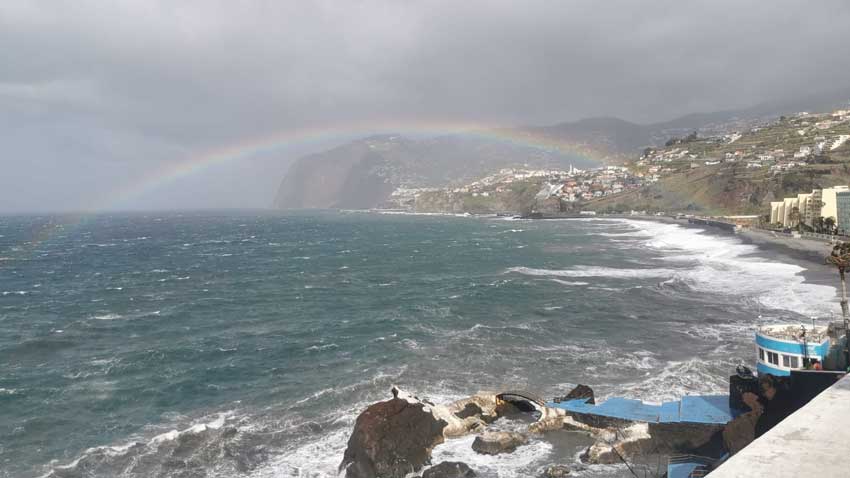
Madeira Island, Portugal is famous for its mild temperatures, green mountains and year-round outdoor lifestyle. But there is one important thing every visitor should understand before arriving:
Madeira does not have one single type of weather.
You can be eating lunch in sunshine beside the sea in Funchal while the mountains above the city are covered in cloud, rain and strong wind.
Madeira's mountainous landscape creates significant local differences in weather. The official Madeira Tourism Board specifically warns that conditions can vary considerably between coastal areas and higher altitudes, where fog and lower temperatures are common even when the coast is warm and sunny.
That is part of Madeira's charm, but it also means visitors should plan differently from a typical beach destination.
This guide explains Madeira weather in 2026, what temperatures you can expect throughout the year, why flights can be affected by wind, how weather can change your hiking plans, and what to do when conditions become difficult.
Madeira Weather at a Glance
Madeira has a subtropical climate with relatively mild temperatures throughout the year. Official tourism information describes average conditions as roughly 17°C in winter and 25°C in summer, although temperatures vary significantly with altitude and location.
For a more detailed picture, IPMA's official 1991–2020 climate normal for Funchal provides the following coastal averages.
Month | Average High | Average Low | Average Rainfall | Days with ≥1 mm rain |
|---|---|---|---|---|
January | 20.0°C | 14.3°C | 67.1 mm | 6.2 |
February | 19.9°C | 13.9°C | 72.4 mm | 5.5 |
March | 20.6°C | 14.3°C | 62.3 mm | 5.8 |
April | 21.0°C | 14.9°C | 45.2 mm | 4.7 |
May | 22.0°C | 16.2°C | 27.2 mm | 3.3 |
June | 23.7°C | 18.2°C | 7.8 mm | 1.0 |
July | 25.4°C | 19.7°C | 1.7 mm | 0.3 |
August | 26.8°C | 20.7°C | 1.3 mm | 0.4 |
September | 26.6°C | 20.4°C | 23.1 mm | 3.1 |
October | 25.2°C | 19.2°C | 91.2 mm | 7.0 |
November | 22.8°C | 17.0°C | 80.3 mm | 7.3 |
December | 21.0°C | 15.5°C | 94.8 mm | 8.6 |
Important: these figures are for Funchal at an altitude of only 58 metres. They should not be treated as the expected temperature at Pico do Areeiro, Pico Ruivo, Paul da Serra or other mountainous areas.
What Is the Best Time to Visit Madeira for Good Weather?
There isn't really a bad season to visit Madeira, but the experience changes throughout the year.
Period | What guests can generally expect | Good for |
|---|---|---|
December–February | Mild coastal temperatures, more rain and a greater chance of Atlantic weather systems | Sightseeing, food, culture, escaping colder European winters |
March–May | Mild to warm temperatures with increasingly dry conditions | Hiking, gardens, sightseeing |
June–August | Warmest and driest period in Funchal | Swimming, beaches, boat trips, outdoor activities |
September–October | Warm weather continues but rainfall begins increasing | Mixed beach and activity holidays |
November | Mild but wetter and more changeable | City breaks, sightseeing, flexible itineraries |
July and August are particularly dry in Funchal: the 1991–2020 climate normal records only 1.7 mm of average rainfall in July and 1.3 mm in August. October, November and December are considerably wetter.
However, even in summer, a forecast showing sunshine in Funchal tells you very little about what conditions will be like at 1,500 or 1,800 metres.
Madeira's Microclimates: Why the Weather Changes So Quickly
One of the most surprising things for first-time visitors is how quickly the weather can change as you travel around Madeira.
The island rises dramatically from sea level to mountains approaching 1,900 metres. Moist Atlantic air interacts with those mountains, creating cloud, fog, rainfall and major temperature differences over relatively short distances.
The Madeira Tourism Board notes that it can be sunny and warm beside the sea while simultaneously foggy and significantly cooler in the mountains.
In practical terms:
Funchal and the south coast may be sunny.
The central mountains may be inside thick cloud.
The north coast may be experiencing rain.
Ponta de São Lourenço may be dry but extremely windy.
Conditions can change again several hours later.
For visitors renting a car, this means it can sometimes make sense to change your day's itinerary rather than cancelling the entire day because of one weather forecast.
Check conditions at the actual destination you are visiting, not simply "Madeira weather".
Yes, It Can Even Snow in Madeira's Mountains
Madeira is subtropical, but its highest elevations can experience surprisingly cold conditions.
A good example occurred in March 2026, when Madeira's Regional Civil Protection warned of possible snow above approximately 1,400–1,500 metres, alongside strong winds and severe maritime conditions. During the same weather episode, gusts in the highlands were forecast to potentially reach 130 km/h, while waves of around 4–5 metres were expected along parts of the coast.
These are exceptional rather than everyday conditions, but they demonstrate why checking only the temperature in Funchal is not sufficient before travelling into the mountains.
Madeira Airport and Strong Wind
Why Are Flights Sometimes Cancelled in Madeira?
Madeira Cristiano Ronaldo Airport is located beside the Atlantic Ocean near Santa Cruz and is particularly exposed to changing wind conditions.
The airport's official aeronautical documentation contains specific operational wind limits depending on wind direction and runway use. It also explicitly warns pilots about turbulence, unexpected wind changes and possible downdrafts and updrafts close to the runway.
This is why you may occasionally see:
delayed departures;
aircraft holding before landing;
aborted approaches or go-arounds;
flights diverted to another airport;
aircraft returning to their departure airport;
cancellations.
It does not necessarily mean conditions look particularly dramatic from your hotel. The relevant wind conditions at the airport and on the aircraft's approach can be very different.
Airlines and individual aircraft may also operate under limits that are more restrictive than the airport's published limits.
Does Madeira Airport Close Every Time It Is Windy?
No.
Wind alone does not automatically mean your flight will be cancelled.
The direction of the wind, wind speed, gusts, turbulence, runway configuration, aircraft type and the operating airline's procedures can all affect the decision.
Rather than trying to predict whether your flight will operate based on a general weather app, check:
your airline's flight status;
the official Madeira Airport arrivals/departures information;
IPMA weather warnings;
Madeira Civil Protection alerts.
The airport publishes live arrival and departure information, including delays and cancellations.
What Happens if My Madeira Flight Is Cancelled Because of Weather?
For flights covered by EU passenger-rights legislation, a cancellation normally gives passengers a choice between reimbursement, rerouting or a return journey, together with certain rights to assistance.
Severe weather can qualify as an extraordinary circumstance, meaning the airline may not owe the normal cash compensation associated with some delays and cancellations.
However, extraordinary circumstances do not automatically remove the airline's obligations to provide rerouting/reimbursement and appropriate care while you wait. EU guidance specifically confirms that passengers can retain rights to assistance such as meals and, where appropriate, accommodation even when disruption results from bad weather.
If your Madeira flight is cancelled
Situation | What to do |
|---|---|
Airline cancels your flight | Contact the airline and ask about rerouting or reimbursement |
Replacement flight is next day | Ask the airline what accommodation and meal assistance applies |
Airline offers a voucher | Check your rights before accepting if you would prefer reimbursement |
Your accommodation reservation is affected | Contact the host immediately |
You have prepaid activities | Contact providers as early as possible |
You purchased travel insurance | Keep receipts, cancellation notices and airline correspondence |
Do not assume every weather-related cancellation automatically produces cash compensation.
Travel Insurance for Madeira
Travel insurance is particularly useful for island travel because a cancelled flight may result in additional accommodation, transport or missed-connection costs.
But not every insurance policy covers every weather-related expense.
Before travelling, check whether your policy covers:
flight cancellation or significant delay;
additional accommodation;
missed connections;
delayed baggage;
emergency medical costs;
prepaid activities;
hiking or other adventure activities you intend to undertake.
Keep receipts for unexpected hotels, meals and transport because insurers may require documentary evidence when processing a claim.
Hiking Weather in Madeira
Madeira's levadas and mountain trails are some of the island's biggest attractions, but mountain weather deserves more caution than coastal sightseeing.
Rain can make paths slippery. Fog can significantly reduce visibility. Strong winds can make exposed ridges dangerous, and heavy rainfall can increase the risk of falling rocks, landslides or damage to paths.
Madeira's official tourism guidance advises walkers to take appropriate equipment including waterproof clothing, spare clothing, food and drink, and, where necessary, a torch for routes involving levada tunnels.
Most importantly, always check whether your trail is officially open before leaving.
IFCN regularly closes or restricts classified trails because of weather, safety conditions, maintenance or damage.
Important New Madeira Hiking Rules for 2026
This is particularly important for visitors travelling to Madeira in 2026.
A new reservation and fee system for IFCN-managed classified walking routes came into force from 1 January 2026.
Visitors using affected classified trails must book a timeslot online through the SIMplifica platform. Registration is required even for users who qualify for an exemption from payment.
For visitors without an exemption, current 2026 prices include:
Hiking option | 2026 visitor price |
|---|---|
Individual classified trail, except PR1 | €4.50 |
PR1 to Pedra Rija only | €4.50 |
Full PR1 route | €10.50 |
Combined trails — 1 day | €9.00 |
Combined trails — 3 days | €22.50 |
Combined trails — 7 days | €52.50 |
The combined passes exclude PR1, and each individual trail still needs to be reserved for an available timeslot.
What If Bad Weather Stops Your Hike?
There is an important distinction.
Bad weather does not automatically mean a trail is officially closed.
IFCN states that weather warnings do not automatically close every classified trail. A closure or restriction is decided based on the situation affecting the individual route.
This also matters financially.
If IFCN officially closes or restricts your booked trail, a rescheduling or refund can be requested, subject to its rules. Requests currently need to be made within 10 working days of the booking date.
However, if the trail remains officially open and you personally decide not to hike because it is raining, IFCN states that this does not qualify for a refund or rescheduling.
So before changing your plans, check the official trail status.
Sea Conditions, Beaches and Boat Trips
Madeira's coastal weather can also change quickly.
The sea is relatively comfortable throughout the year, with Madeira Tourism reporting average seawater temperatures of approximately 18°C in winter to 24°C in summer.
However, pleasant air temperatures do not guarantee calm seas.
Atlantic storms can produce strong swell and large waves, particularly around exposed sections of the north and west coasts.
During significant weather warnings, avoid:
standing close to breaking waves;
entering closed promenades or coastal paths;
swimming from unmonitored rocky areas;
ignoring red flags at beaches;
attempting sea activities after an operator has cancelled for safety reasons.
Boat tours, whale-watching trips, diving excursions and ferry services can sometimes be postponed because of sea conditions even when the weather appears pleasant on land.
Driving in Madeira During Bad Weather
Driving conditions can also change significantly as you move into Madeira's mountains.
Common problems include:
dense fog;
very heavy rain over short periods;
water flowing across roads;
fallen branches;
rockfalls;
strong crosswinds on exposed roads.
Madeira Civil Protection specifically advises extra caution in mountainous areas, exposed slopes and coastal zones during adverse weather and tells residents and visitors to follow IPMA and Civil Protection information.
If visibility deteriorates significantly in the mountains, there is usually little benefit in continuing toward a viewpoint simply because your itinerary says you should.
Madeira will still be there tomorrow.
What Should You Pack for Madeira Weather?
Even during warmer months, packing only beach clothing is a mistake if you plan to explore the island.
A practical Madeira packing list includes:
Item | Why |
|---|---|
Light waterproof jacket | Mountain rain and showers |
Jumper or light fleece | Higher elevations |
Comfortable walking shoes | Levadas, viewpoints and cobbled streets |
Sunscreen | Strong sun even when temperatures feel mild |
Small backpack | Hiking and day trips |
Refillable water bottle | Outdoor activities |
Portable charger | Navigation and emergency communication |
Torch/headlamp | Some levada tunnels |
Swimwear | Swimming is possible for much of the year |
If you're planning serious mountain walks, equipment requirements should be based on the specific trail rather than this basic sightseeing list.
How to Check Madeira Weather Before Leaving Your Accommodation
A good morning routine takes only a few minutes.
1. Check IPMA
Use Portugal's official meteorological service for forecasts and weather warnings.
2. Check the specific part of Madeira you are visiting
Do not rely exclusively on the Funchal forecast if you're travelling to Pico do Areeiro, Santana, Porto Moniz or Ponta de São Lourenço.
3. Check the IFCN trail status
If hiking, confirm that your route is open and whether any restrictions apply. IFCN says the official trail-status page is kept updated.
4. Check Madeira Civil Protection during warnings
The Prociv Madeira app includes IPMA weather warnings and Civil Protection alerts and can send notifications to your phone.
5. Check live flight information on travel days
If conditions are windy, monitor your airline and Madeira Airport rather than relying on rumours or social-media posts.
If the Weather Is Bad: Don't Waste the Day
One of Madeira's biggest advantages is its microclimate.
Bad weather in one part of the island does not necessarily mean bad weather everywhere.
If mountain conditions are unsuitable, alternatives can include:
exploring Funchal;
visiting museums;
visiting the Mercado dos Lavradores;
enjoying Madeira's restaurants;
visiting wineries;
travelling toward a clearer part of the coast;
visiting indoor attractions;
moving a hike to another day.
A flexible itinerary works particularly well in Madeira.
Instead of deciding on Monday that you must hike Pico do Areeiro on Thursday, check conditions closer to the date and move outdoor activities around accordingly.
Madeira Weather: Quick Guide for Guests
Weather condition | Possible impact | Best response |
|---|---|---|
Strong airport winds | Flight delays, diversions or cancellations | Monitor airline + airport |
Heavy mountain rain | Slippery trails, closures | Check IFCN |
Dense mountain fog | Poor visibility | Consider another activity |
Strong mountain winds | Exposed trails become dangerous | Follow official warnings |
Large Atlantic swell | Beach/boat restrictions | Follow maritime/local advice |
Heavy rain | Local flooding or rockfall risk | Avoid affected roads/areas |
Sunny coast + cloudy mountains | Very common microclimate difference | Check destination separately |
Frequently Asked Questions About Madeira Weather
Does it rain a lot in Madeira?
It depends heavily on the season and location.
Funchal is very dry during summer. According to IPMA's 1991–2020 normal, average rainfall is only 1.7 mm in July and 1.3 mm in August. Rainfall increases substantially during autumn and winter, reaching an average 94.8 mm in December.
Mountainous areas can experience very different conditions from Funchal.
What is the hottest month in Madeira?
Based on the Funchal 1991–2020 climate normal, August has the highest average maximum temperature at 26.8°C, closely followed by September at 26.6°C.
What is the coldest month in Madeira?
At coastal Funchal, February has the lowest average temperature at approximately 16.8°C, with an average daytime maximum of 19.9°C and minimum of 13.9°C.
Mountain temperatures can be dramatically colder.
Can you swim in Madeira in winter?
Yes, many people do. Official Madeira tourism information puts average seawater temperatures at approximately 18°C during winter, rising toward 24°C in summer.
Always consider local sea conditions before entering the water.
Are flights to Madeira often cancelled?
Most flights operate normally, but Madeira Airport is sensitive to particular wind conditions. Its published aeronautical information includes specific wind limitations as well as warnings concerning turbulence and rapidly changing wind conditions near the runway.
Therefore occasional delays, diversions and cancellations should be considered a normal possibility when travelling to an Atlantic island.
Can I hike in Madeira when it rains?
Light rain does not automatically close Madeira's trails. However, conditions should be assessed carefully and you should check the official status of the route.
An IPMA weather warning also does not automatically mean every classified trail is closed; IFCN decides closures and restrictions according to conditions affecting individual routes.
Do I need to book Madeira hikes in 2026?
For IFCN-managed classified walking routes covered by the new system, yes. The 2026 system uses mandatory online reservations and timeslots through SIMplifica.
Final Thoughts: Don't Fear Madeira's Weather — Plan Around It
Madeira's changeable weather should not discourage you from visiting.
In fact, the island's unusual combination of warm coastline, cloud-covered mountains, lush forests and Atlantic weather is part of what makes Madeira so spectacular.
The key is flexibility.
Check the weather for the exact area you're visiting, verify trail conditions before hiking, monitor flights when strong winds are forecast, and avoid building an itinerary where one weather disruption ruins the entire holiday.
Most visitors will experience Madeira's famous mild climate without major disruption.
But understanding how the island works means that if the clouds descend on Pico do Areeiro, your boat trip gets moved, or your flight is delayed because of wind, you'll know what to do next.
And quite often in Madeira, the solution is surprisingly simple:
drive 20 minutes in another direction and the sun may be shining.
Weather and trail conditions can change quickly. Guests should always check current information from IPMA, Madeira Civil Protection, IFCN, their airline and Madeira Airport before travelling or undertaking outdoor activities.